
Executive Summary
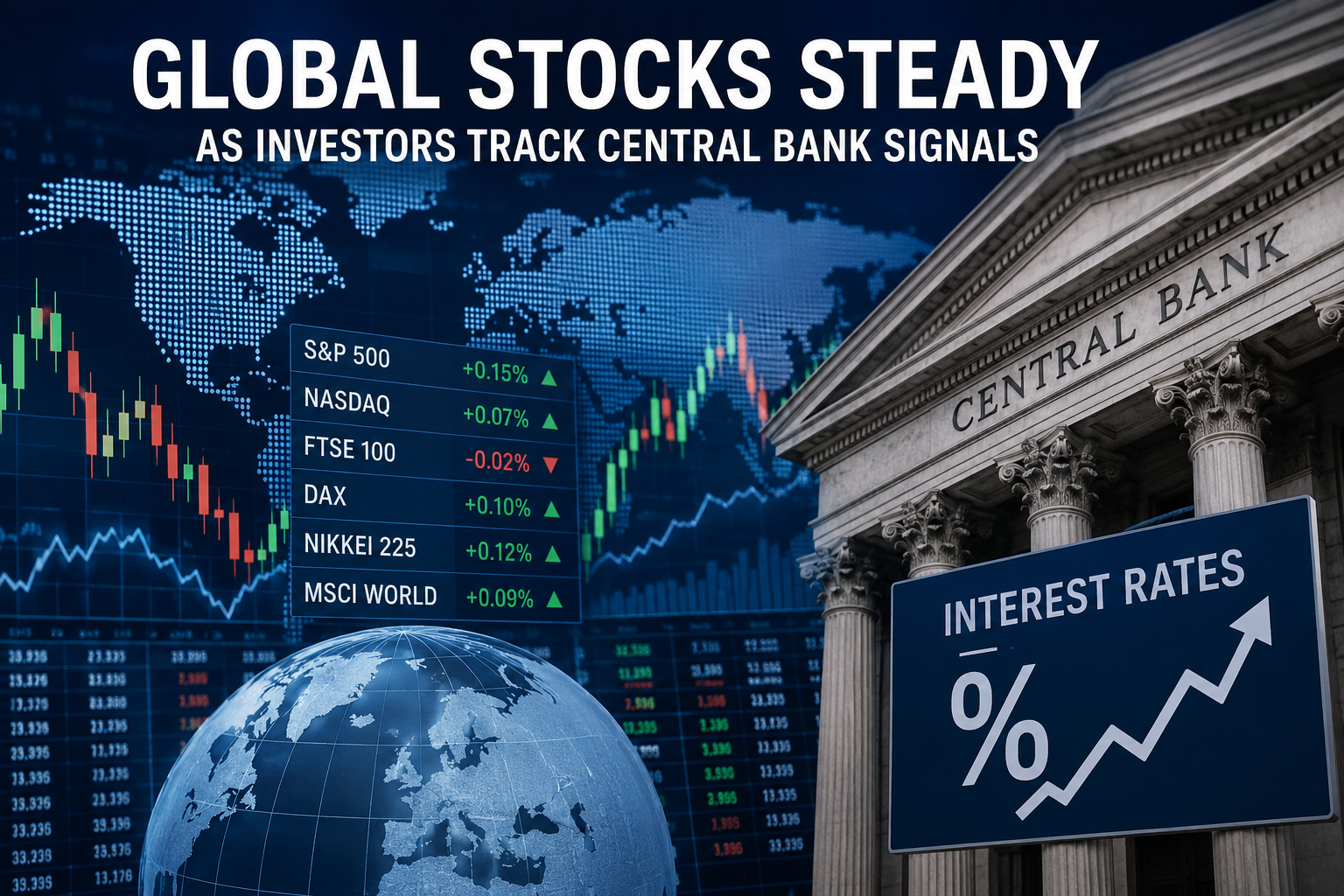
Global equity markets remained relatively stable as investors focused on signals from major central banks and assessed the future direction of interest rates. Traders continued monitoring inflation trends, economic indicators, and policy comments for clues about whether monetary authorities will maintain, reduce, or adjust borrowing costs. While market movements were limited, investor attention remained centered on the balance between economic growth and inflation risks. The outlook for stocks, bonds, and currencies continues to depend heavily on central bank decisions and the pace of global economic changes.
What Happened?
Global stock markets traded in a cautious environment as investors evaluated new developments related to monetary policy. Major indexes across regions showed limited movement as market participants waited for clearer guidance from central banks, including the Federal Reserve and other major financial authorities.
Central banks play a major role in financial markets because their decisions influence borrowing costs, consumer spending, business investment, and investor sentiment. When interest rates are high, companies and consumers often face higher financing expenses, while lower rates can support economic activity by making borrowing cheaper.
Investors have been closely watching central bank statements and economic data releases to understand how policymakers view inflation and growth. Recent market activity suggests that traders are attempting to balance expectations for future rate changes with concerns about economic resilience.
The cautious tone in global markets reflects uncertainty about the next phase of monetary policy. Investors are examining whether inflation pressures are easing enough to allow central banks to shift toward more supportive policies or whether stronger price pressures could keep rates elevated for longer.
Key Figures and Data
Market performance remained mixed as investors adjusted their expectations based on economic developments.
Key factors influencing trading decisions include:
- Global equity indexes moved within narrow ranges as investors avoided major directional moves.
- Government bond yields remained an important indicator of market expectations for future interest rates.
- Currency markets responded to changes in expectations surrounding central bank policy.
- Inflation reports and employment data continued to be major drivers of investor sentiment.
- Interest rate expectations remained a central focus for equity and fixed-income markets.
The relationship between inflation and interest rates remains one of the most important themes in global finance. Inflation measures indicate how quickly prices are rising, while central banks use interest rates as a tool to influence economic activity and maintain price stability.
Market Impact
The cautious market environment has affected multiple asset classes, including stocks, bonds, and currencies.
For equity investors, central bank policy remains a major factor because interest rates influence company valuations. Higher rates can increase the cost of capital for businesses and reduce the attractiveness of some investments. Lower rates may improve financial conditions and support corporate expansion.
Bond markets have also reacted closely to policy expectations. Bond yields often move based on expectations for future interest rates, making them a key signal for investors assessing economic conditions.
Currency markets have been sensitive to differences between central bank approaches. When one central bank is expected to keep rates higher than others, its currency may experience increased demand because investors seek potentially higher returns.
Businesses are also monitoring these developments because financing conditions influence expansion plans, hiring decisions, and investment strategies.
Industry Context
Central banks worldwide have spent recent years managing the economic effects of inflation, supply chain disruptions, and changing consumer demand.
The post-pandemic period created significant challenges for policymakers as economies experienced rapid price increases followed by efforts to restore stability. Higher interest rates became a primary method for slowing inflation, but policymakers have had to consider the risk of weakening economic growth.
Financial markets now operate in an environment where small changes in central bank communication can create significant reactions. Investors closely analyze speeches, policy statements, and economic reports for indications about future decisions.
The current market focus also reflects broader concerns about global economic growth. Different regions are experiencing different conditions, with some economies showing stronger activity while others face slower growth and tighter financial conditions.
What Comes Next?
Markets are expected to remain focused on upcoming economic data and central bank updates. Inflation reports, labor market figures, and business activity indicators will likely influence expectations about future policy decisions.
Investors will continue assessing whether central banks have reached a point where monetary policy can become less restrictive or whether additional caution is required.
Corporate earnings and economic performance will also remain important factors. Companies are facing changing consumer behavior, evolving technology trends, and shifting costs, all of which may affect future market valuations.
The next phase for global markets will likely depend on how policymakers balance inflation control with economic stability.
Final Thoughts
Global stocks remained steady as investors tracked central bank signals and evaluated the future path of monetary policy. The market environment continues to be shaped by inflation trends, interest rate expectations, and economic data.
While no single factor determines market performance, central bank decisions remain one of the most influential forces affecting global finance. Investors, companies, and policymakers will continue watching economic indicators closely as they navigate changing financial conditions.
SEO Title:
Global Stocks Steady as Investors Watch Central Bank Signals and Rate Outlook
Meta Description:
Global stocks remain stable as investors track central bank signals, inflation trends, interest rate expectations, and the outlook for global markets.
Focus Keyword:
Global stocks steady
Slug:
global-stocks-steady-central-bank-signals
Tags:
Global Markets, Central Banks, Interest Rates, Stock Markets, Inflation, Economy, Finance
Source News:
Global stocks steady as investors track central bank signals
