


Introduction
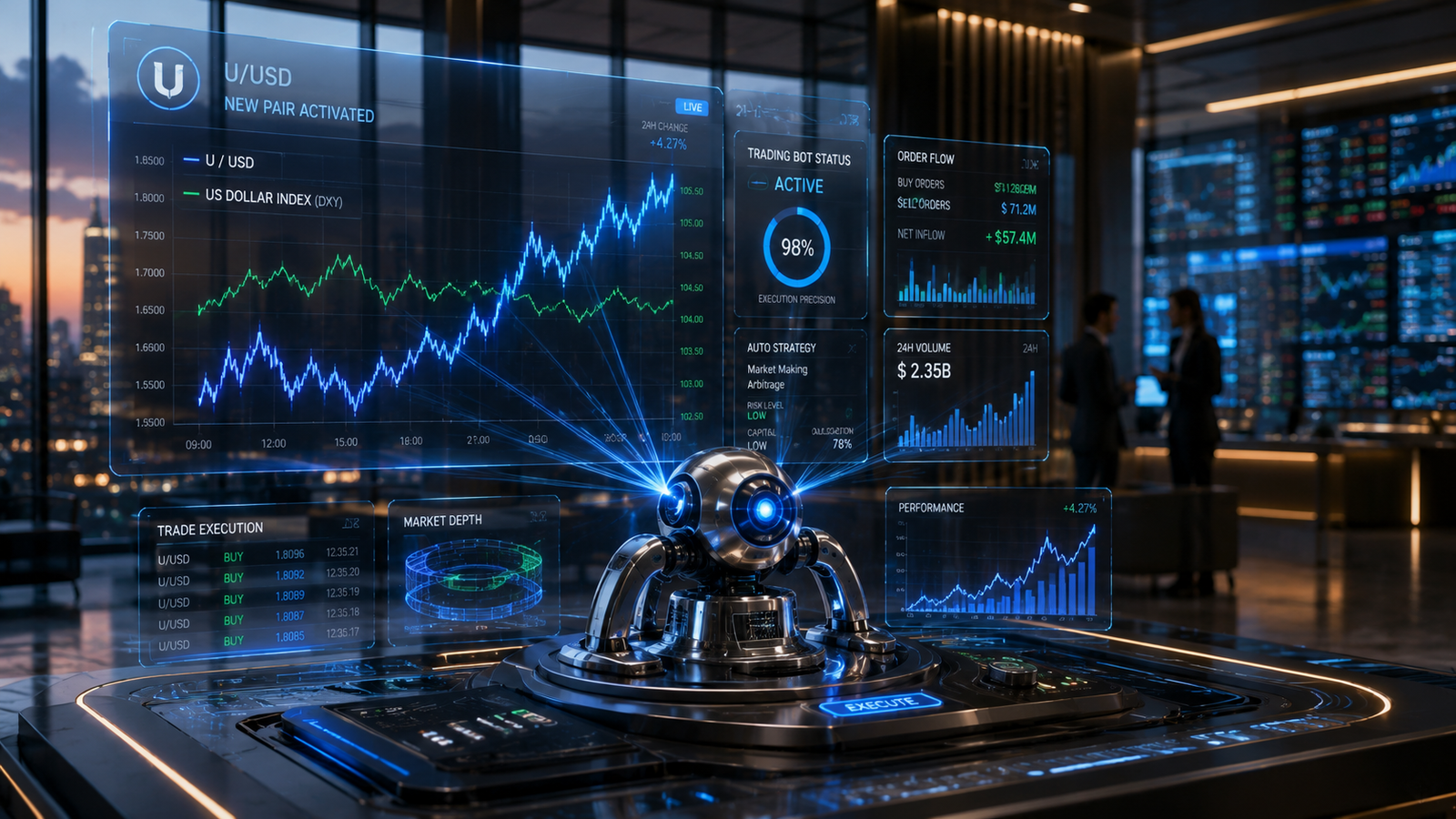
Global cryptocurrency exchange Binance has listed the U/USD spot trading pair while simultaneously expanding operational support for its automated trading bots. The integration forms part of a broader expansion into algorithmic tools, tokenized traditional assets, and hybrid stablecoin infrastructure.
What Happened
The addition of the U/USD pair integrates the “U” stablecoin—a decentralized asset deployed on the BNB Chain that is pegged 1:1 to the U.S. dollar and backed by a combination of digital tokens and real-world assets (RWAs) such as tokenized U.S. Treasury bills.
Concurrently, Binance upgraded its automated trading suite. The platform enhanced its Spot Dollar-Cost Averaging (DCA) and Dynamic Grid Trading (DGT) bots. The updated grid algorithms automatically recalculate upper and lower boundaries during periods of elevated volatility rather than terminating execution when prices breach predefined ranges.
Alongside these spot automation updates, Binance introduced commodity options for Gold (XAU) and Silver (XAG) settled in USDT, added 10 tokenized stock assets (bStocks)—including Apple, Amazon, and Goldman Sachs—and expanded its perpetual futures contracts to cover select tradicional equities.
Why It Matters
Automated execution accounts for a growing share of daily volume on central order books. By expanding automated bot compatibility to new trading pairs like U/USD, Binance is seeking to improve order book liquidity and reduce execution slippage for algorithmic retail and institutional users.
Furthermore, integrating RWA-backed payment tokens alongside tokenized traditional equities highlights an ongoing trend among offshore exchanges to aggregate crypto-native and traditional financial instruments within a single margin engine.
Market Impact
The availability of automated grid and DCA tools on new pairs generally leads to tighter bid-ask spreads during baseline consolidation phases. However, Binance accompanied the release with updated security notices advising users against utilizing unverified third-party trading scripts or API integrations due to risks associated with wash trading schemes and potential credential compromise.
Background
Centralized trading venues have steadily expanded proprietary automation tools over recent trading cycles to retain users seeking 24/7 execution capability. Concurrently, regional regulatory pressure has reshaped exchange availability across multiple markets, leading platforms to focus on expanding multi-asset derivatives, tokenized securities, and RWA-collateralized assets in accessible jurisdictions.
TrendCipherz Insight
The expansion of proprietary trading bots reflects a maturation of retail market infrastructure, where basic algorithmic strategies are natively provided by exchanges rather than requiring external API tools. As traditional market assets become further tokenized, liquidity will increasingly cluster around venues capable of providing unified margin between spot crypto, RWAs, and conventional equity derivatives.
What to Watch Next
Security Advisories: Follow exchange security updates regarding API key management and third-party automated bot authorization frameworks.
U/USD Order Book Liquidity: Monitor daily volume and order depth across the U/USD pair as trading bots commence operations.
RWA Stablecoin Adoption: Track total value locked (TVL) and collateral composition within the United Stables (U) protocol on BNB Chain.